Are We the Aliens That Colonized Earth?
1. Introduction
The Earth Colonization Theory proposes that intelligent extraterrestrial civilizations may have visited, influenced, or even deliberately seeded life on our planet long ago.
With billions of sun-like stars in the Milky Way galaxy alone, and a high statistical probability that many of them host Earth-like planets in habitable zones, it is entirely possible that intelligent life has emerged elsewhere — some of it billions of years before our own sun even formed.
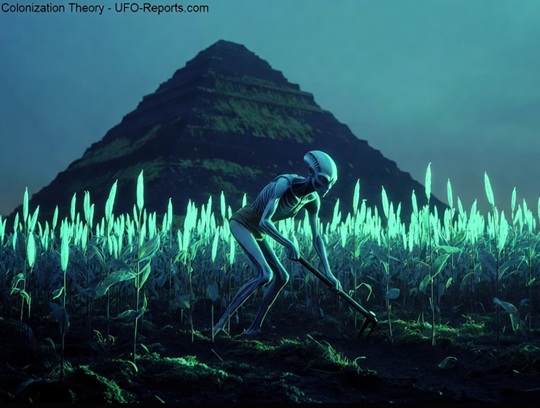
If advanced civilizations developed interstellar travel, it is reasonable to assume they may have reached our solar system in the distant past — just as humanity is now working toward establishing bases on the Moon and Mars. The theory suggests we may not be the first, nor the only species to lay claim to this planet.
This idea has gained significant attention in recent years, driven by the Fermi Paradox (if intelligent life is common, where is everybody?) and the Drake Equation, which estimates the number of communicative civilizations in our galaxy. Ancient astronaut theories have also surged in popularity, with many pointing to structures like the Great Pyramid of Giza and Stonehenge as potential evidence of outside assistance.
While modern archaeology has shown that humans possessed the tools and ingenuity to build these megalithic structures, other aspects — particularly the advanced astronomical knowledge embedded in them — remain more difficult to explain through human effort alone.
Ancient artwork from various cultures also depicts strange beings and technologies that seem remarkably advanced for their time. Combined with recent whistleblower claims suggesting the existence of at least four distinct alien races — including the human-like Nordics — the question becomes even more compelling: Could some of these beings represent our own ancient ancestors, or long-term stewards of Earth?
I remain open-minded but skeptical. While many ancient mysteries have rational explanations, certain patterns in art, mythology, and modern UAP reports are harder to ignore. The possibility that humanity itself may carry a deeper connection to the stars is one of the most profound questions we can ask.
2. Core Concepts of the Earth Colonization Theory
The Earth Colonization Theory rests on several interconnected ideas that attempt to explain both the origin of life on our planet and humanity’s place in the cosmos.
Ancient Seeding & Directed Panspermia
One of the central ideas is that life on Earth did not arise purely by chance. Proponents suggest that an advanced civilization may have intentionally seeded Earth with microbial life — a concept known as directed panspermia.
This theory gains intrigue when we look at Mars. Scientific evidence shows that Mars was once warm and wet, with lakes, rivers, and possibly even seas on its surface roughly 3 to 4 billion years ago — conditions that could have supported life long before Earth became habitable. If life never developed on Mars despite these ideal conditions, it raises a profound question: Is the emergence of life extremely rare in the universe?
Some argue that this rarity would actually support the idea of a supreme creator, while others see it as evidence that life on Earth may have been deliberately introduced by an intelligent species.
Genetic Engineering of Early Humans
Another key pillar of the theory is that an advanced civilization may have genetically engineered early hominids, accelerating the development of modern Homo sapiens. Proponents point to the relatively sudden appearance of advanced cognitive abilities, language, and complex culture in human history as potential evidence of outside intervention.
Long-Term Colonization and Monitoring
The theory also proposes that certain extraterrestrial civilizations may have maintained a long-term presence on Earth — either through direct colonization, hidden bases, or ongoing observation. Some versions suggest that certain alien races still view Earth as “theirs” or maintain a stake in humanity’s development, whether for scientific, resource, or spiritual reasons.
This monitoring could explain the persistent nature of modern UAP activity, particularly around nuclear sites, military installations, and areas of significant human technological advancement.
3. Supporting Evidence & Arguments
While the Earth Colonization Theory remains speculative, proponents point to several intriguing areas that they believe deserve serious consideration.
Ancient Texts and Myths
Many ancient cultures describe beings descending from the sky, flying machines, and advanced technology. In my Extraterrestrial Personal Theories page, I explore several Biblical connections, including the famous description in the Book of Ezekiel of a “wheel within a wheel” full of eyes that moved in any direction without turning.
This passage (Ezekiel 1:15-21) is often cited by ancient astronaut theorists as a possible description of a UFO. The prophet describes glowing wheels that appeared to be “a wheel within a wheel,” moving in any of the four directions without turning, accompanied by beings with wings. The “eyes” covering the wheels are interpreted by some as lights, portholes, or advanced sensors. While mainstream biblical scholars see this as a symbolic vision of divine power, others argue it bears striking similarities to modern UFO encounter reports.
Other notable examples include ancient Indian texts describing sophisticated flying machines known as Vimanas, as well as the Dogon tribe of Mali, who possessed detailed knowledge of the Sirius star system long before modern astronomy confirmed it.
Ancient artwork from various cultures also depicts strange beings descending from the sky. Many statues and carvings of “gods” throughout history show figures with unusual features — elongated heads, large eyes, or non-human proportions — leading some researchers to speculate these may represent actual alien visitors rather than purely mythological beings.
Unusual Leaps in Human Evolution and Intelligence
Humanity’s relatively sudden cognitive development has puzzled scientists for decades. Some researchers claim that key technological breakthroughs — such as the microprocessor and Kevlar — may have originated from recovered materials from the 1947 Roswell crash. While these claims remain unproven, they continue to fuel speculation that outside intervention may have accelerated human progress.
Genetic Anomalies
Another point of interest is humanity’s genetic makeup. Scientists have long been puzzled by large portions of so-called “junk DNA” and the relatively sudden emergence of complex language and abstract thinking. Some whistleblowers have gone further, claiming that non-human DNA may exist within certain human bloodlines. Adding to the intrigue are recent allegations that the CIA has been using commercial DNA databases like Ancestry.com and 23andMe to search for individuals with possible extraterrestrial genetic markers.
Ancient Megalithic Structures
Several ancient constructions continue to challenge conventional explanations due to their scale, precision, and astronomical alignments. The most frequently cited examples include:
- The Great Pyramid of Giza
- Stonehenge
- The massive megalithic stones at Baalbek (Lebanon)
- Sacsayhuamán and Puma Punku in Peru and Bolivia
- The Moai statues of Easter Island
While archaeologists have demonstrated that ancient humans possessed impressive engineering capabilities, the sheer size and precision of some of these structures continue to spark debate about whether outside assistance was involved.
Modern UFO/UAP Activity
Contemporary reports frequently show UAPs displaying strong interest in nuclear weapons sites, military installations, genetic research facilities, and areas of significant technological development. One logical interpretation is that advanced intelligences may be actively monitoring humanity to prevent self-destruction through nuclear war — suggesting they have a vested interest in Earth’s survival.
4. The Nordic / Human-Looking Alien Connection
One of the most compelling elements of the Earth Colonization Theory revolves around the so-called Nordics — tall, human-like extraterrestrial beings frequently described as having fair skin, blonde hair, and striking blue eyes.
According to numerous contactee reports, abduction accounts, and statements from alleged insiders, Nordics (or similar-looking races) appear to have maintained a long and ongoing relationship with Earth. Unlike the more commonly reported Grays, Nordics are often portrayed as benevolent observers or even stewards who have taken a direct interest in humanity’s evolution and development.
Possible Interbreeding or Genetic Projects
Many researchers speculate that Nordics — or related human-looking beings — may have engaged in genetic experimentation or limited interbreeding with early humans. This theory suggests they could have played a role in accelerating human cognitive development, language, and intelligence. Some go further and propose that certain human bloodlines may carry trace extraterrestrial genetic markers from these ancient interactions.
Link to Recent Claims
This concept has gained fresh relevance following recent statements by physicists Dr. Hal Puthoff and Dr. Eric Davis, who claim the U.S. government has recovered biological material from at least four distinct non-human species — one of which is reportedly the Nordics.
You can read our full breakdown of these claims here: 4 Alien Races Reportedly Recovered from Crashed UFOs / UAPs.
If accurate, the Nordic connection would suggest that some extraterrestrial groups may not be distant visitors, but rather long-term participants in Earth’s story — possibly viewing humanity as distant relatives, experimental subjects, or part of a larger colonization effort.
5. Counter-Arguments & Skeptical View
While the Earth Colonization Theory is intriguing and has gained traction in recent years, it is important to examine the counter-arguments and maintain a healthy level of skepticism.
Lack of Concrete Physical Evidence
At its core, the Earth Colonization Theory remains just that — a theory. Despite decades of claims, there is still no publicly available, verifiable physical evidence (such as alien artifacts, DNA samples, or unambiguous wreckage) that conclusively proves extraterrestrial intervention in Earth’s history.
Many of these ideas originated as fringe conspiracy theories but have recently gained mainstream attention due to high-profile whistleblowers and insiders speaking out. While their testimonies are compelling, they still fall short of hard, reproducible proof.
Mainstream Scientific Explanations
Evolution is an established scientific fact supported by overwhelming evidence. However, some researchers question the speed and scale at which certain leaps in human intelligence and culture occurred. Could natural evolution alone account for the rapid development of complex language, abstract thought, and advanced problem-solving abilities? Or was there another guiding hand involved — whether through genetic fine-tuning or external influence?
Mainstream science attributes these developments to natural selection, environmental pressures, and cultural evolution, dismissing ancient astronaut interpretations as unnecessary.
Risk of Confirmation Bias
One of the biggest criticisms of ancient astronaut theories when it comes to Earth Colonization Theory is the strong risk of confirmation bias. Proponents often interpret ancient texts, artwork, and structures through a modern lens, seeing UFOs and aliens where ancient people may have simply been describing gods, myths, or natural phenomena in their own cultural language.
Government and Official Stance
The U.S. government, through the All-domain Anomaly Resolution Office (AARO), has increasingly acknowledged that UAPs are a real phenomenon worthy of serious study. However, they continue to maintain that there is no verifiable evidence of extraterrestrial technology or non-human biologics.
Many researchers believe the government has now fully admitted these mysteries are real, but is still withholding significant information about what they actually know — especially regarding crash retrieval programs and potential non-human intelligence.
6. Possible Motivations (If True)
If the Earth Colonization Theory is accurate, what motivations could drive advanced civilizations to take such a long-term interest in our planet? Several possibilities have been proposed by researchers, insiders, and theorists.
Resource Extraction and Territorial Competition
One of the more pragmatic theories suggests that certain alien groups may be interested in Earth’s natural resources — whether minerals, water, or even genetic material. If multiple intelligent races exist, it is possible that Earth has become part of a larger cosmic struggle for territory and influence, much like human conflicts over land and resources throughout history.
In this scenario, Earth is just one small piece of a much larger picture. Some theorists take this idea further and propose that humanity itself may function as a long-term genetic farm — a source of biological material being cultivated over thousands of years.
Scientific Experiment and Observation
Another widely discussed motivation is that Earth serves as a vast scientific laboratory. Advanced civilizations may be conducting long-term genetic and sociological experiments, carefully observing how intelligent life evolves under various conditions. This would help explain the frequent monitoring of nuclear sites, environmental changes, and human technological advancements.
Spiritual or Consciousness-Related Reasons
Some accounts — particularly those involving the Nordic beings — suggest motivations that go beyond the physical. These groups may view humanity as younger relatives or souls in development, taking an active role in guiding our spiritual or consciousness evolution.
Long-Term Survival and Backup Plan
Finally, some believe certain alien races see Earth as a potential backup colony or genetic insurance policy. If their home worlds face environmental collapse, resource depletion, or conflict, Earth could serve as a long-term survival option or source of compatible genetic material for their species.
In this view, humanity may not be the dominant species on its own planet, but rather one component of a much larger, ongoing interstellar project.
7. Modern Implications
If the Earth Colonization Theory holds any truth, its consequences reach far beyond ancient history and directly into our present reality.
Connection to Current UAP Disclosure
Much of what has been discussed in this theory aligns closely with recent claims made by credible whistleblowers. Reports of recovered non-human biologics, multiple alien species (including human-looking Nordics), long-term monitoring programs, and genetic interest all fit within a larger narrative suggesting Earth has been visited, influenced, or partially managed for a very long time.
Genetic Privacy Concerns
The recent allegations that the CIA may have been using commercial DNA databases like 23andMe and Ancestry.com to search for extraterrestrial genetic markers raise serious ethical and privacy concerns. Genetic markers can reveal far more than ancestry — they can predict physical traits, predispositions, and potentially unique bloodlines, much like selectively breeding prized livestock.
While the specific story of hunting “alien DNA” is relatively new, the broader idea that governments have long been interested in studying human genetics is not. There are even older claims suggesting efforts to identify particular ancestral bloodlines, including those tied to ancient or “biblical” lineages.
Why This Theory Matters
Even if only partially true, the Earth Colonization Theory would fundamentally change our understanding of who we are, where we came from, and what our place is in the universe. It would mean humanity may not be the sole author of its own story, but rather part of a much larger, ongoing cosmic narrative.
Ethical and Philosophical Questions
This theory forces us to confront difficult questions:
- If advanced beings have influenced human development, do they still hold any claim or responsibility toward us?
- What are the moral implications of genetic manipulation — whether ancient or modern?
- Does humanity have a fundamental right to full disclosure about its own origins?
- Are we truly sovereign on our own planet, or have we always been part of someone else’s long-term project?
These are no longer abstract philosophical questions. In an era of increasing UAP transparency, they strike at the very core of human identity and autonomy.
8. Final Thoughts on Earth Colonization Theory
After years of studying UFOs, ancient history, and recent disclosures, I remain open-minded but cautious about the Earth Colonization Theory.
The most convincing aspect for me is not necessarily the construction of massive stone structures, but the extraordinary astronomical knowledge possessed by certain ancient civilizations. How did early cultures, living in stone structures without modern instruments, possess such precise understanding of star systems — including detailed knowledge of the Sirius binary system long before modern telescopes confirmed it?
This level of astronomical sophistication, appearing across disconnected cultures, stands out as one of the strongest pieces of circumstantial evidence suggesting some form of external influence or contact.
This theory also fits comfortably with my broader views on UFOs and spirituality. I believe in a supreme Creator, yet I also accept that the universe is vast and ancient beyond human comprehension. It is entirely possible that other intelligent beings are part of that same creation.
Whether these beings acted as observers, genetic stewards, or long-term colonizers remains unknown. What matters most is that we continue asking honest questions with both curiosity and discernment as more information emerges.
— SpaceCowboy
Curator, UFO-Reports.com