Unidentified Submersible Objects (USOs): Mysteries Beneath the Waves
While Unidentified Aerial Phenomena (UAP) have captured global attention in recent years, their underwater counterparts — known as Unidentified Submersible Objects or USOs — remain one of the least explored yet equally fascinating aspects of the phenomenon. These objects are reported to move through water at extraordinary speeds, exhibit transmedium capabilities (traveling seamlessly between air and sea), and display performance characteristics that defy known human or natural technology.
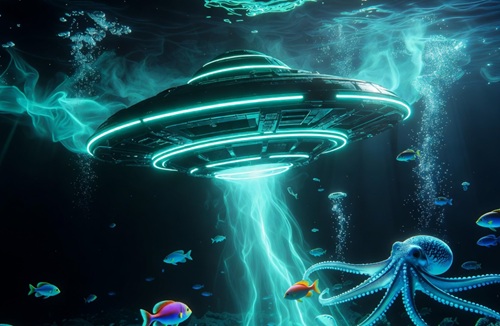
USOs have been documented for decades by military personnel, commercial pilots, fishermen, and civilians. With over 70% of Earth’s surface covered by oceans and much of it unexplored, the underwater domain offers ample space for such anomalies. Modern reports, including thousands logged near U.S. coastlines, have renewed interest in these submerged mysteries.
What Are USOs?
Unidentified Submersible Objects refer to any anomalous object observed underwater or entering/exiting bodies of water without clear identification. They often demonstrate:
- High-speed underwater travel (hundreds of knots)
- Transmedium travel — moving from air into water (or vice versa) with little to no deceleration or surface disturbance
- Lack of visible propulsion systems
- Ability to operate at extreme depths
- Interaction with naval vessels and sonar systems
The U.S. Navy has historically classified many USO reports as marine life (whales, sharks, etc.), but numerous cases involving trained observers and sensor data challenge these explanations. For broader context on different explanations, see our page on The Main Theories Behind UFOs.
Historical USO Cases
Shag Harbour Incident (1967, Nova Scotia, Canada)
On October 4, 1967, residents of the small fishing village of Shag Harbour witnessed a large object with flashing orange lights descend from the sky and crash into the Atlantic Ocean. At least 11 witnesses, including fishermen and RCMP officers, described hearing a whistling sound followed by a loud bang. The object left a patch of yellow foam but no wreckage.
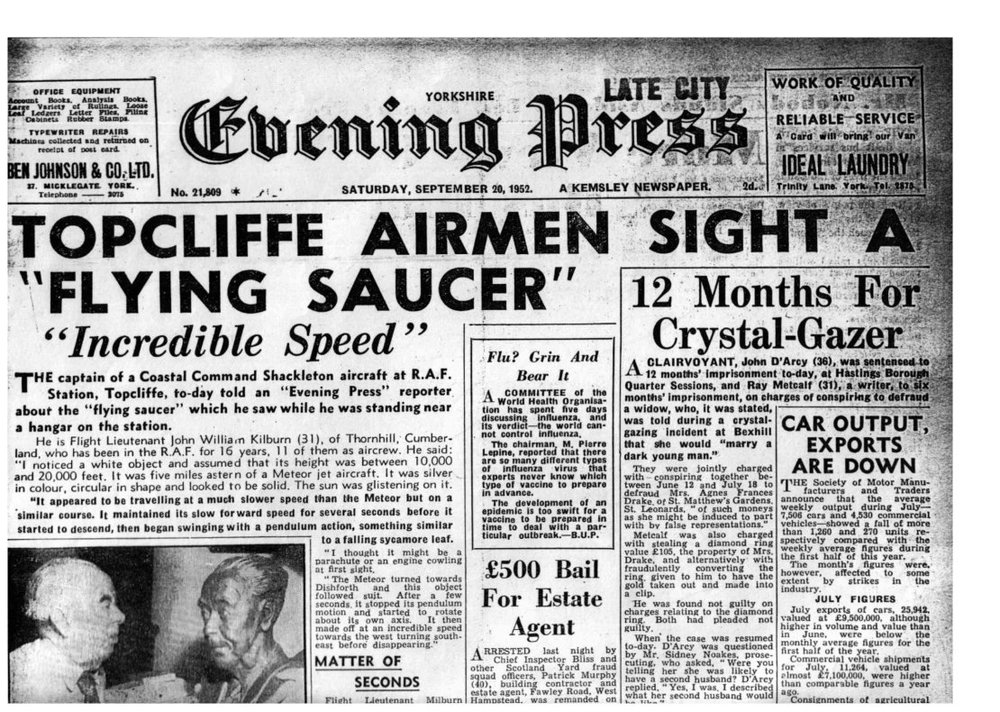
The Canadian Coast Guard, RCMP, and military conducted searches. Divers reportedly found nothing conclusive, but some accounts suggest multiple objects were involved. This remains Canada’s most famous UFO-related event and is often cited as a classic USO case due to the object’s apparent transition from air to sea.
Puerto Rico Submarine USO Chase (1963)
During U.S. Navy training exercises off Puerto Rico, a submerged object was reportedly tracked by sonar for four days. The object moved at speeds exceeding 150 knots (nearly 175 mph) and dove to depths of over 27,000 feet — far beyond the capabilities of 1960s submarine technology. A U.S. submarine allegedly broke formation to pursue it.
USS Stein Incident (1978)
The frigate USS Stein experienced severe damage to its rubber sonar dome while operating in the Pacific. Investigation revealed deep gouges and claw-like scratches containing remnants of a large, unknown creature. Some researchers link this to possible Unidentified Submersible Objects activity or an enormous unidentified marine entity.
Modern Military USO Encounters
USS Nimitz and Related Incidents (2004 onward)
The famous 2004 “Tic Tac” encounter off California involved not only the airborne object but also a large disturbance in the ocean surface, suggesting a possible underwater component. Multiple naval assets reported anomalous underwater activity during the same period.
In 2019, the USS Omaha recorded a spherical object that appeared to enter the ocean after maneuvering near the ship. Pentagon-confirmed video shows the object vanishing into the water. Similar incidents involving the USS Russell and other vessels have been documented, with objects demonstrating transmedium capabilities.
Aguadilla, Puerto Rico (2013)
One of the most compelling pieces of USO footage comes from a U.S. Customs and Border Protection aircraft. On April 26, 2013, infrared video captured a metallic-looking object flying near Rafael Hernandez Airport. The object crossed over land, returned to the ocean, appeared to enter the water without slowing, split into two objects, and continued moving underwater.
The footage, analyzed by groups like the Scientific Coalition for UAP Studies (SCU), shows the object maintaining speed during air-to-water transition. While some official assessments suggest mundane explanations (such as balloons or birds), independent analyses continue to debate its anomalous nature.
Recent Trends and Data
Modern crowdsourced platforms have recorded thousands of USO reports. One prominent UFO-tracking app has logged over 9,000 USO sightings near U.S. shorelines in a single recent period. These include objects hovering above water before submerging, fast-moving underwater lights, and interactions with boats and aircraft.
Former U.S. Navy officials and researchers have highlighted USOs as potential maritime security concerns. Objects capable of such extreme performance could pose risks to naval operations, submarine traffic, and critical infrastructure.
Possible Explanations
Researchers and skeptics offer several theories for Unidentified Submersible Objects reports:
- Advanced Human Technology: Secret military drones, underwater vehicles, or next-generation propulsion systems from the U.S., China, or Russia.
- Unknown Marine Life: Large undiscovered creatures or misidentified known species (giant squid, whales, etc.).
- Geophysical Phenomena: Underwater volcanic activity, bioluminescence, or seismic events creating light and movement illusions.
- Extraterrestrial or Non-Human Intelligence: Vehicles from advanced civilizations operating in Earth’s oceans, possibly using them as bases.
- Misidentification or Hoaxes: Optical illusions, equipment malfunctions, or deliberate fabrications.
Why USOs Matter
The study of Unidentified Submersible Objects is important for several reasons. Oceans remain largely unexplored, holding potential for scientific discoveries in biology, geology, and physics. If some USOs represent advanced technology — whether human or otherwise — understanding them has significant national security implications. See our Declassified Documents archive for related official records.
Transmedium objects challenge our understanding of propulsion, materials science, and physics. Their ability to operate equally well in air and water suggests technology far beyond current public knowledge.
Furthermore, the volume of reports from credible military sources has prompted official interest. Congressional hearings and Pentagon task forces have increasingly acknowledged the need to investigate both aerial and aquatic anomalies.
USOs Around the World
Unidentified Submersible Objects reports are not limited to North America. Russian submariners have described fast-moving underwater “croakers.” Lake Baikal in Siberia has a long history of strange underwater lights and objects. Similar accounts come from the Mediterranean, South America, and Asian waters.
These global patterns suggest the phenomenon is not confined to any single nation or region.
Conclusion: The Hidden Frontier
Given that our oceans remain largely unexplored—with less than 0.001% of the deep seafloor directly observed by humans and over 80-90% of the ocean still unknown—it is entirely reasonable to consider that advanced Unidentified Submersible Objects (USOs) could maintain hidden bases right here on Earth. These craft have repeatedly demonstrated remarkable transmedium capabilities, seamlessly entering and exiting water at high speeds without creating disturbances or debris, as reported in numerous military encounters. This ability suggests they are not hindered by the extreme pressures, temperatures, or darkness of the deep ocean, making underwater habitats not only possible but strategically advantageous.
For such a base to exist, several environmental factors align perfectly with observed USO behavior. Deep ocean locations could provide natural shielding from surface detection, including radar, sonar limitations, and satellite surveillance. Hydrothermal vents and geothermal activity might offer abundant, sustainable energy sources, while the immense water column itself acts as superior radiation protection and concealment. Theories point to potential sites in areas with frequent USO activity, such as off the coast of California (including formations like Sycamore Knoll), the Pacific near Baja, or regions tied to incidents like Shag Harbour, where objects reportedly traveled underwater for significant distances after apparent crashes.
The overwhelming evidence of transmedium travel—objects accelerating underwater at hundreds of miles per hour, tracked by Navy sonar and witnessed by credible personnel—strongly supports the idea of nearby operational bases. Retired Rear Admiral Tim Gallaudet and other experts have highlighted how these phenomena jeopardize maritime security precisely because of our ignorance of the oceans. If these are non-human intelligences, maintaining bases beneath the waves would allow continuous monitoring of humanity with minimal risk of discovery. In my view, the combination of vast unexplored territory and consistent eyewitness and instrumental data makes an Earth-based underwater presence not just speculative, but a highly plausible explanation for many of these enduring mysteries.
Unidentified Submersible Objects represent one of the final frontiers in the study of anomalous phenomena. As technology improves — with better sonar, underwater drones, and infrared imaging — we may gain more data on these elusive objects.
Whether they prove to be advanced human craft, unknown natural phenomena, or something more extraordinary, USOs deserve serious scientific attention alongside their aerial counterparts.
This article is for informational and educational purposes. Most USO reports ultimately receive conventional explanations, but a small number remain unexplained after investigation. Critical thinking and cross-referencing of sources is encouraged.